Visits To My Village
Visits To My Village
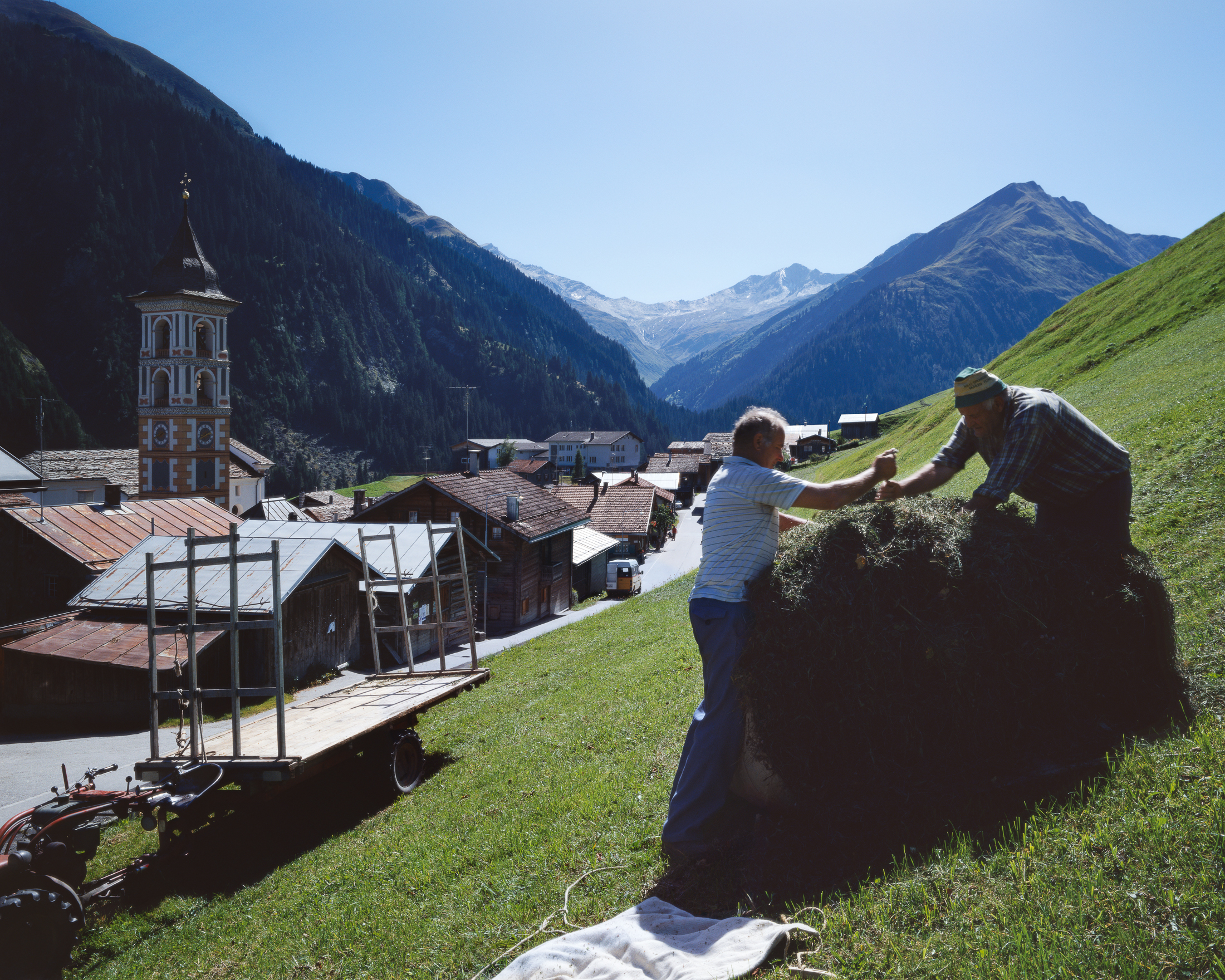
It was a cloudless day in mid-August when I found Emil and Gion Giusep making hay bundles on the slopes above the village. They, like my dad, had never upgraded to a hay loader and were still hauling hay on their AEBI. They knew me well and just kept raking hay together into armfuls, which they then stacked on the hay cloth. I set up my 4x5 film camera and exposed a few plates, while also working it with my digital camera. It took a while, and towards the end, I asked them how much more they had left to harvest. "This is it. Last field." It was their last field before retiring, and they were the last farmers to still consistently make hay bundles. A technique that kept all my ancestors alive through the centuries crept one step closer to the dustbin of history that day.
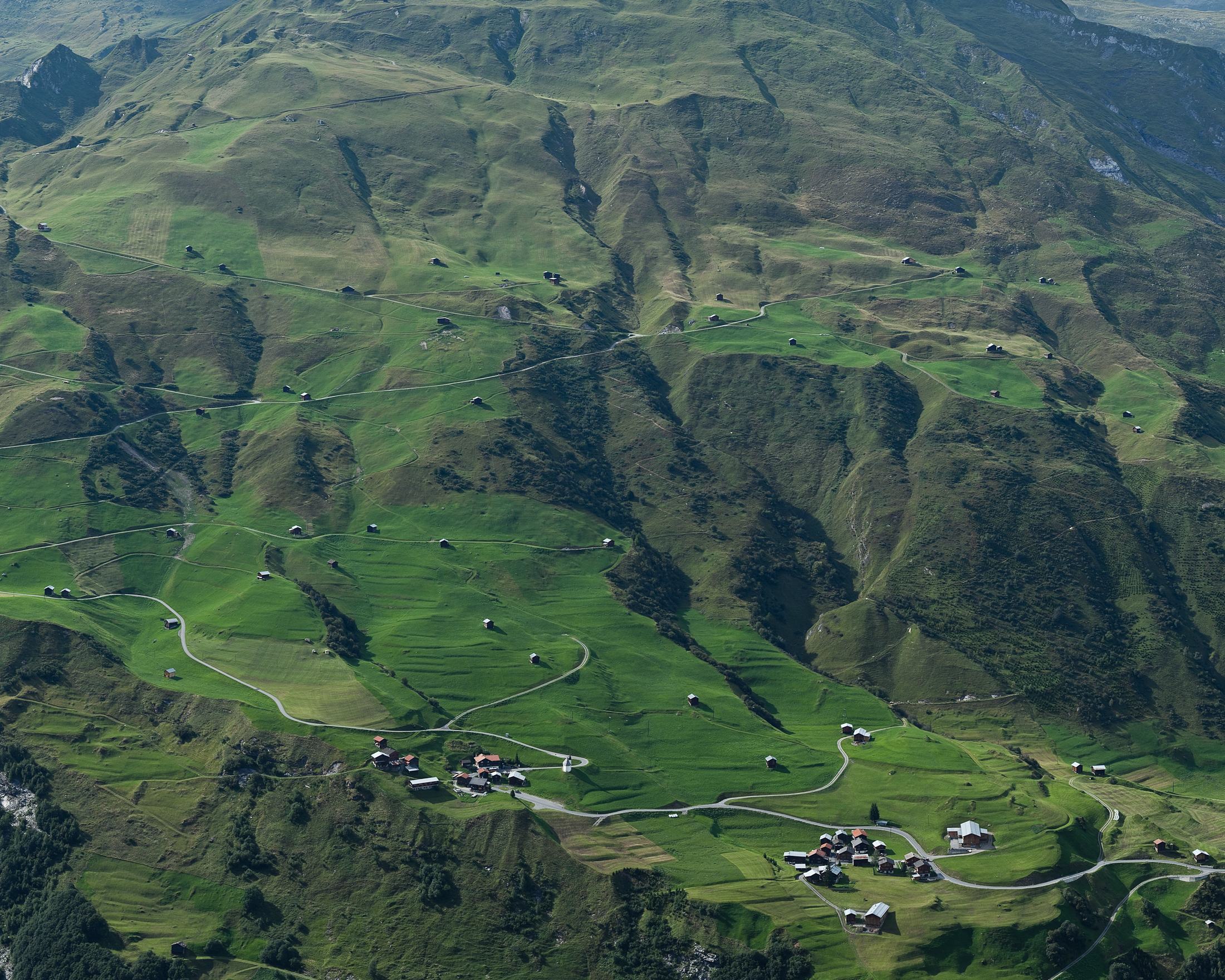
Every visit, something is about to disappear or is no longer. If I lived in the village, it might just be what it is, but because I step into the moments, they stick out to me.
Photographing in the village is my attempt to understand and process the steady changes to village life over the course of my lifetime. The act of photographing keeps me from becoming a stranger in my own village, making the interactions with the villagers — the process of creating this work — as important to me as the photographs themselves.
The village has become a place that's neither here nor there for me. A place I can never truly leave and a place I can never fully return to either.
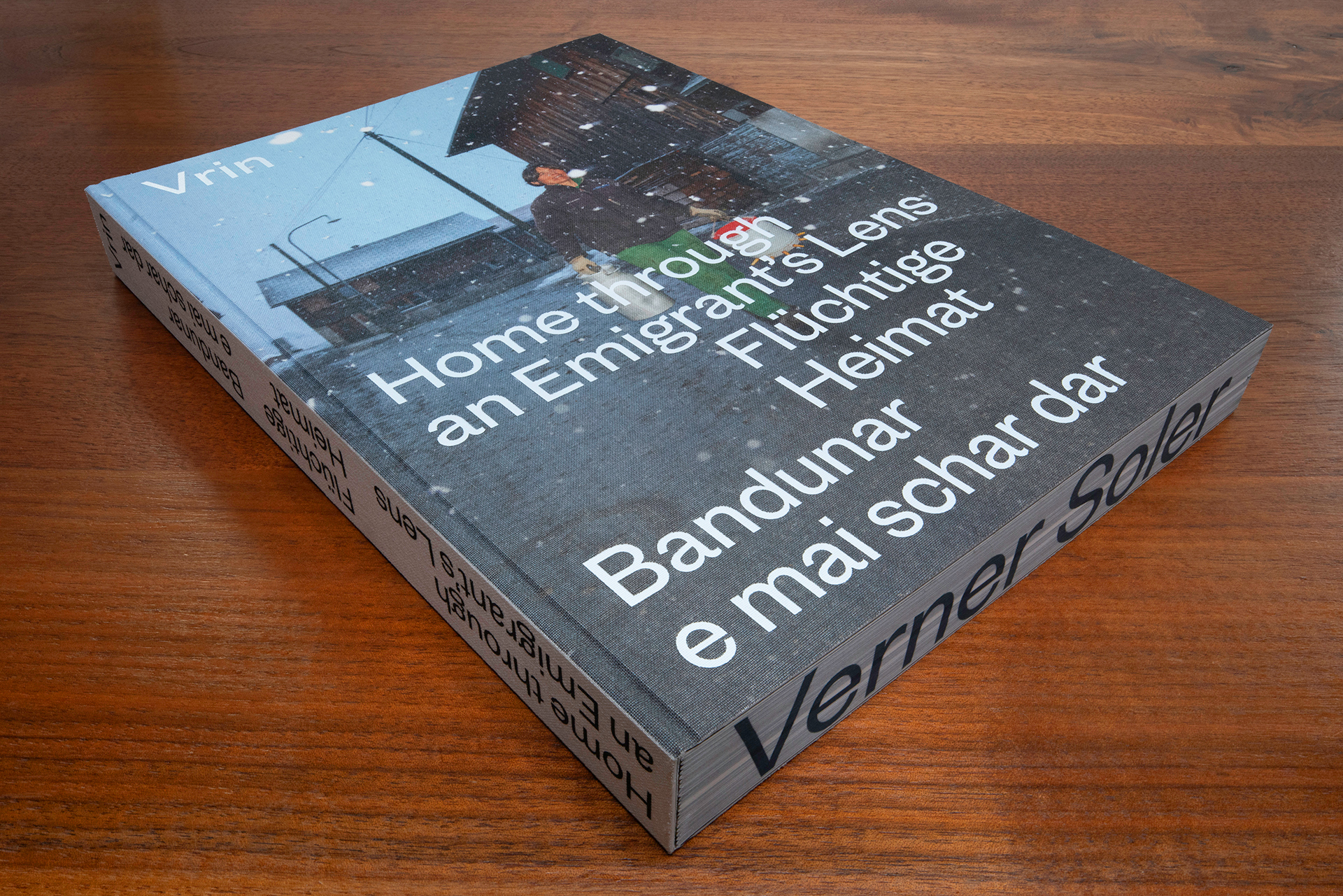
Thirty years of photographs became a book. Vrin — Home through an Emigrant's Lens | Flüchtige Heimat | Bandunar e mai schar dar — a monograph with 154 photographs, with texts in English, German, and Romansh, my mother tongue. A good friend called it "A National Geographic story that's personal."
Published by Chasa Editura Rumantscha in collaboration with Scheidegger & Spiess, distributed through the University of Chicago Press.
NZZ (Neue Zürcher Zeitung) ★★★★★, 2024
"Sulettamein pervia da quei omagi alla faultsch ston ins haver quei cudisch." ("For this homage to the scythe alone, one must own this book.") — Leo Tuor, La Quotidiana
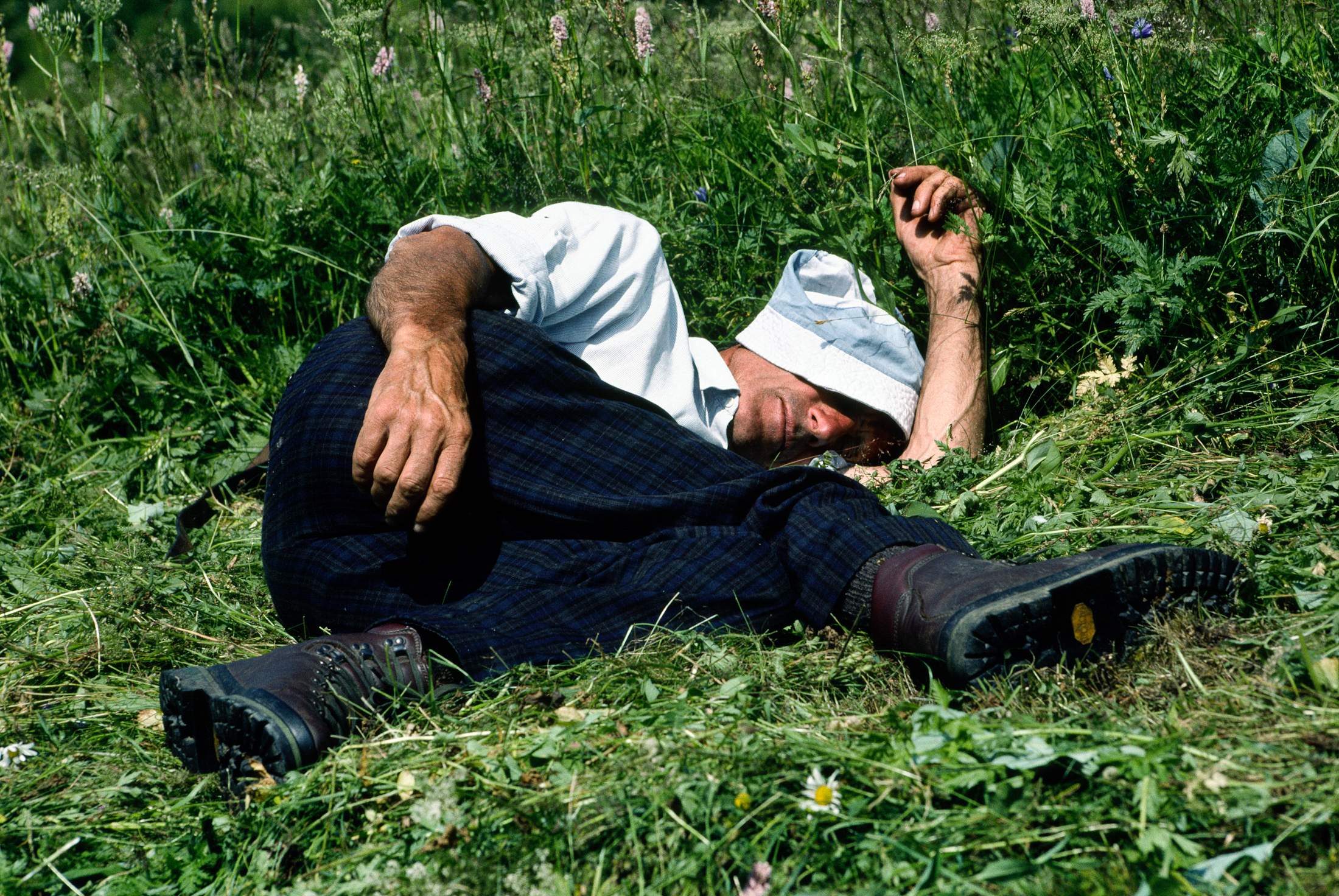
Dad Resting
Vater ruht sich aus
Bab paussa
From a very early age on, I worked alongside my parents during summer. Each year I did more, until I was doing the work of a full adult in my late teens.
When I left in 1990, I remember feeling deeply guilty, knowing that the work I had previously done would fall back on my Dad. I knew he was now working much harder than he should have been at the age of 61.
Five years later I went back in summer for the first time. My sister and brother-in-law had just taken over the farm from my Dad. He still worked a lot helping them, but the responsibility was off his shoulders. One day, after cutting hay with the scythe for a few hours, he laid down on the fresh grass and fell asleep. I watched him and saw how much he had aged in those five years. He was tired, not just from the work, but from the emotional ache of having his son live so far away.
Es war bei meinem ersten Besuch im Sommer. Vater hatte den Betrieb an meine Schwester und ihren Mann übergeben, packet aber immer noch kräftig an. An jenem Tag mähte er ein paar Stunden mit der Sense, bis er sich hinlegte und einschlief. Ich kann mich nicht erinnern, dass mein Vater sich früher je ausgeruht hätte.
Nun war er müde von der Arbeit, aber auch vor lauter Sorge um seinen Sohn, der so weit weggezogen war.
Jeu sai strusch seregurdar che bab pussava denter la lavur cu jeu erel in buob. Batter las faultschs ni far en dents a ristials, rullar si batlin is, zatgei dev’ei adina da far. Tschun onns suenter ch’jeu erel ius naven, sund’jeu gnius en vacanzas la stad. Bab veva uss surdau il menaschi a mia sora ed a siu um. El gidava denton aunc bia. Quei gi si Foppa, sur Ligiazun, suenter ver segau cun faultsch in’uriala eis el schischius giu amiez canvau e sedurmentaus en. El era staunchels. Buca mo dalla lavur, mobein era dil schar encrescher per siu fegl.
Summer Snow
Schnee mitten im Sommer
Neiv da stad
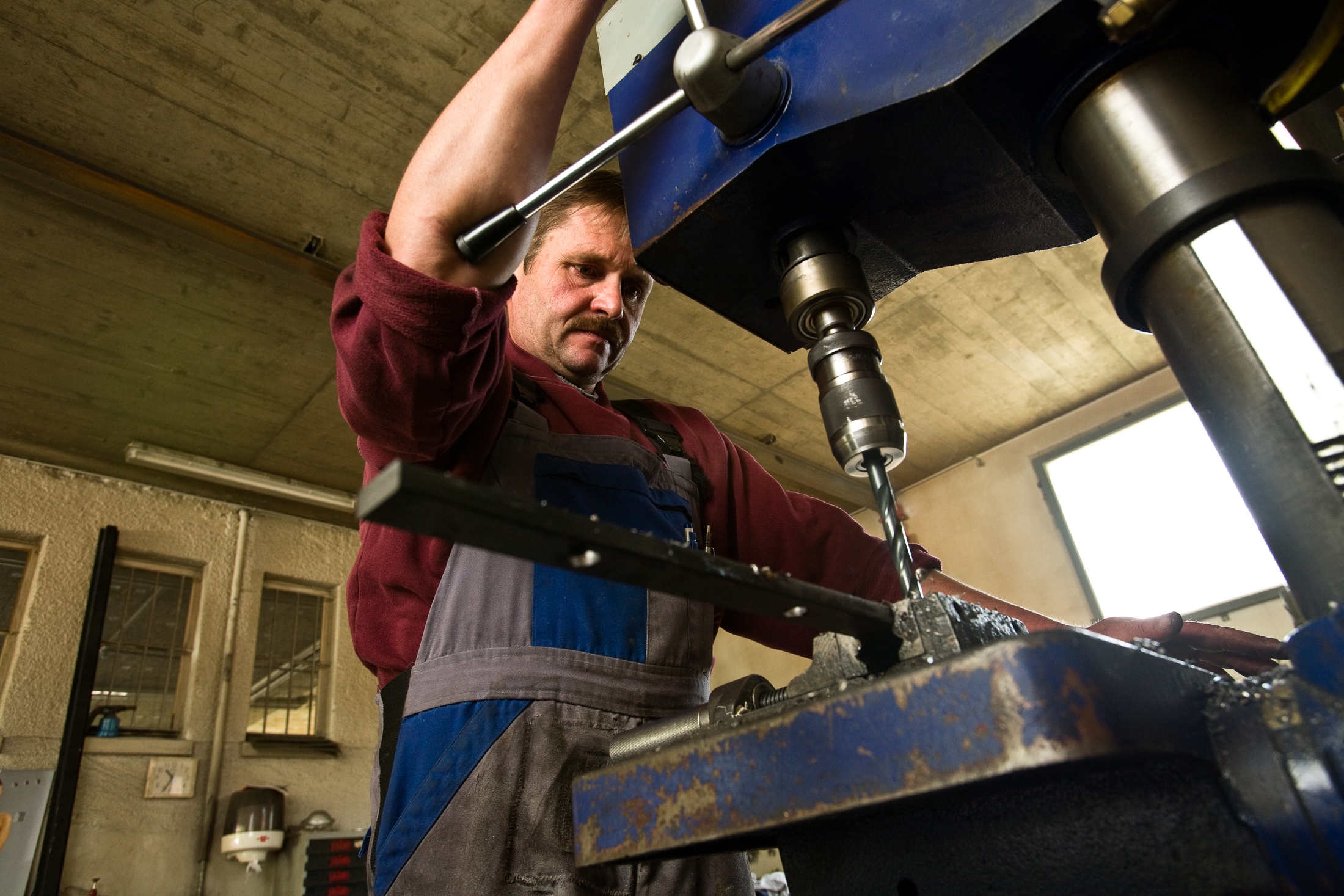
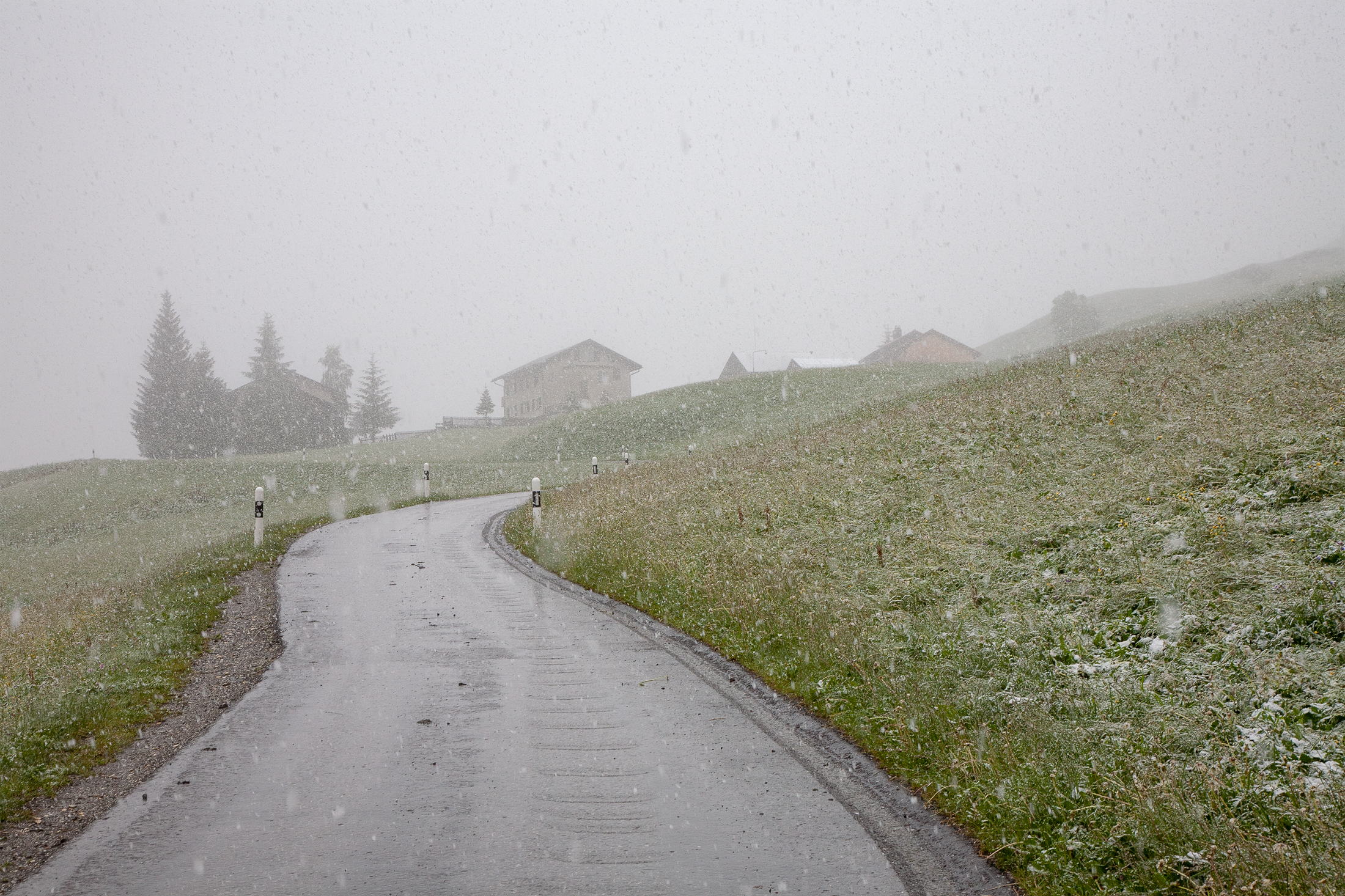
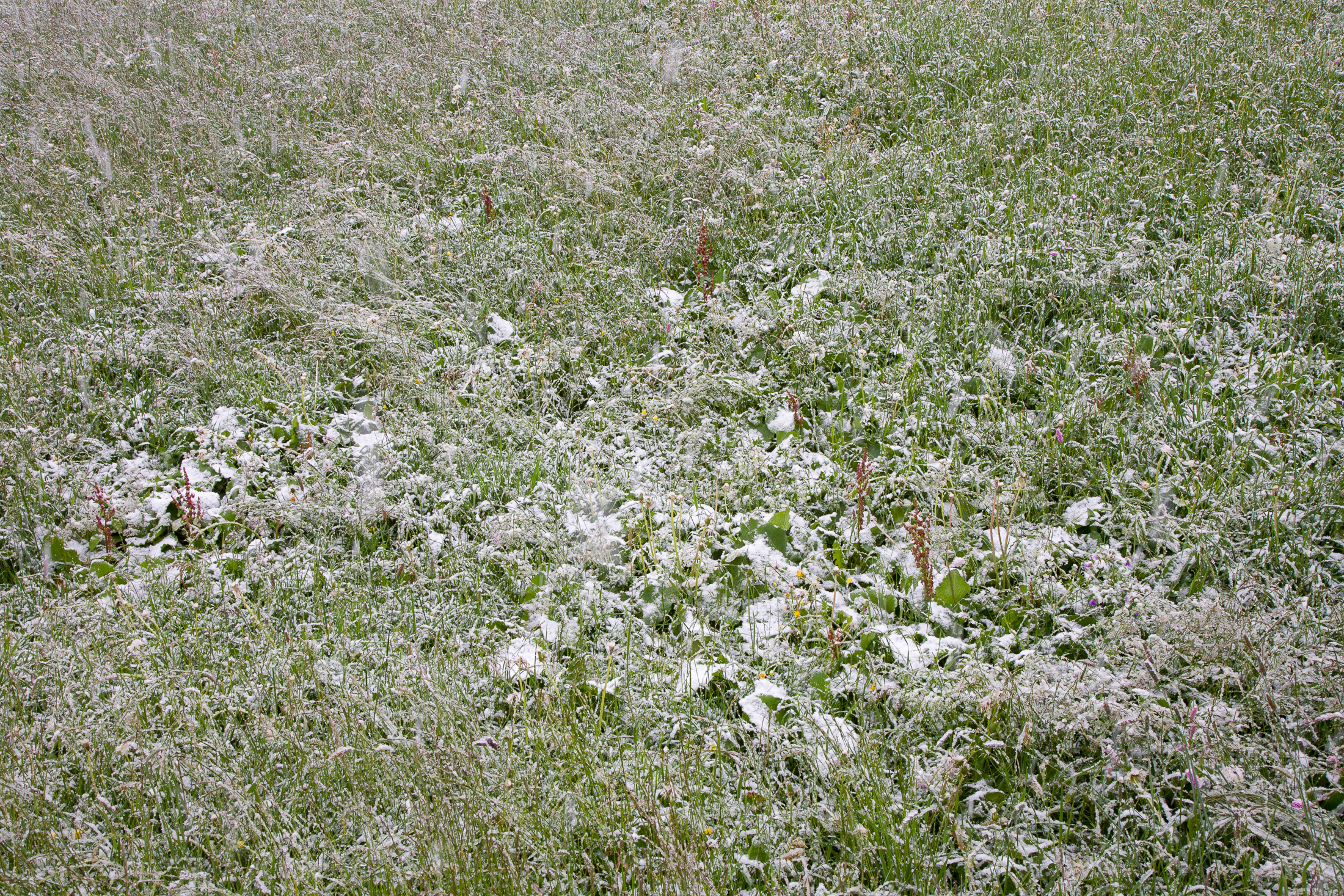
It happens. The farmers hate it, just as much as probably everyone else living in the village. But for me it’s a beautiful, fresh reminder of childhood adventures. Snow in summer was exciting, in a guilty kind of way, since I was fully aware of my father worrying about the hay harvest getting damaged and the turmoil it created with the animals up on the summer pastures. However, it was a break from the hay harvest, a break from routine, a vacation from summer vacation.
Perhaps it was the Almighty punishing the adults for making us work during summer—their way of saying, “Give the kids a break!”
Schneefall im Sommer. Ein Albtraum für die Bauern und ein Traum für uns, als wir Kinder waren. So hatten wir für einmal frei und mussten nicht beim Heuen mithelfen.
Jeu da buob: «Nua ei bab?»
Mumma: «O, lez ha stiu ir si Ramosa a gidar cullas vaccas ch’ein ella neiv … Quei dat ils dètgs donns sch’ella setschenta propi giu cheu. Lu dat il fein ensemen e sche va ei miserabel da segar e sch’ins vegn bu grad vidlunder sche vegni marsch suten.»
«Lu sai jeu far tgei ch’jeu vi oz?»
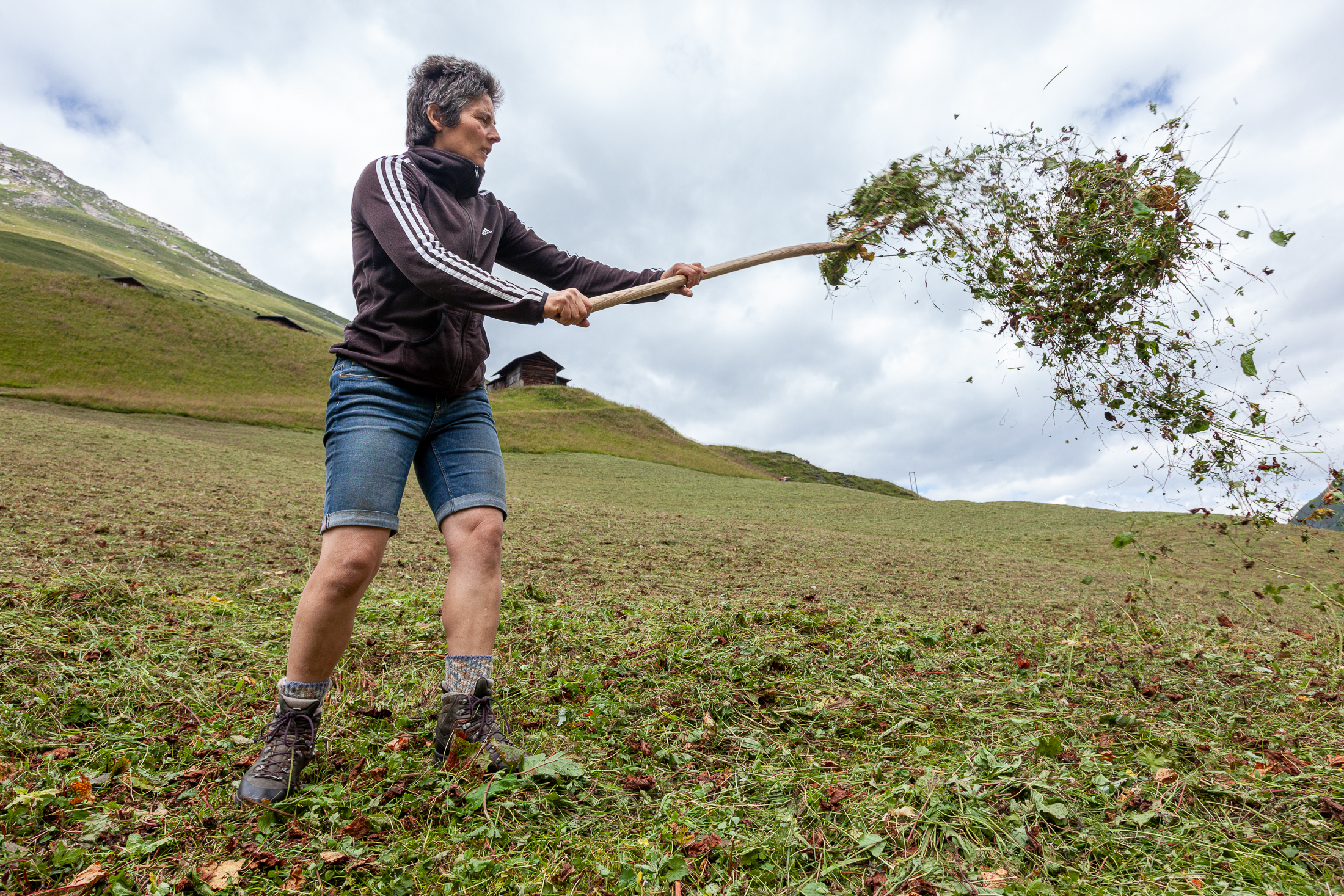
Tedding Hay
Zetten
Enzerdar
Spreading freshly cut hay with the pitch-fork so it dries well used to be the introduction to child labor when I was growing up. The danger of hurting yourself or someone else with the pitchfork was much smaller if kids were tasked with it than if they were idling around open to the creative whims of childhood.
But doing it right is a skill that has to be learned. First you have to pick up a forkload of freshly cut grass without jamming the tines into the ground—or your toes. Then, once you lift the grass into the air, your left hand (assuming you’re right-handed) points the handle in the direction you want to spread the grass, while your right wrist gives the handle two quick rotations in opposite directions, causing the grass to fly through the air where it gets aired out before it lands on the ground. If you made clumps, they stayed green underneath, and your sin would be discovered in the late afternoon or the next day, when we had to “turn” the field for the other side of the grass to dry.
Eigentlich sollte ich es als meinen ersten Job auf den Lebenslauf setzen. Mit sechs oder sieben Jahren habe ich es gelernt. Es hat mir Ausdauer und Arbeitsethos beigebracht. Und das Aushalten von Lange-weile. Die Langeweile war auch gut für die Gedanken. Sie konnten sich frei entfalten und überall hingehen, wohin sie wollten. Um das frisch gemähte Heu zum Trocknen gut auszu-breiten, braucht es aber auch Geschick und eine gute Technik. Manchmal schmerzten am Abend meine Handgelenke. Mehr als heute, wenn ich am Computer arbeite.
«Miri lu da bu far migliacs, schiglioc has lu verdas cu ei fuss da far panuglias.» Quei era l’admoniziun cu nus eran buobanaglia. Lu vevan nus magari las canvialas che dulavan d’enzerdar. Oz fan ellas mal da scriver sil computer.
Winter’s End
Winterende
Fin d’unviern
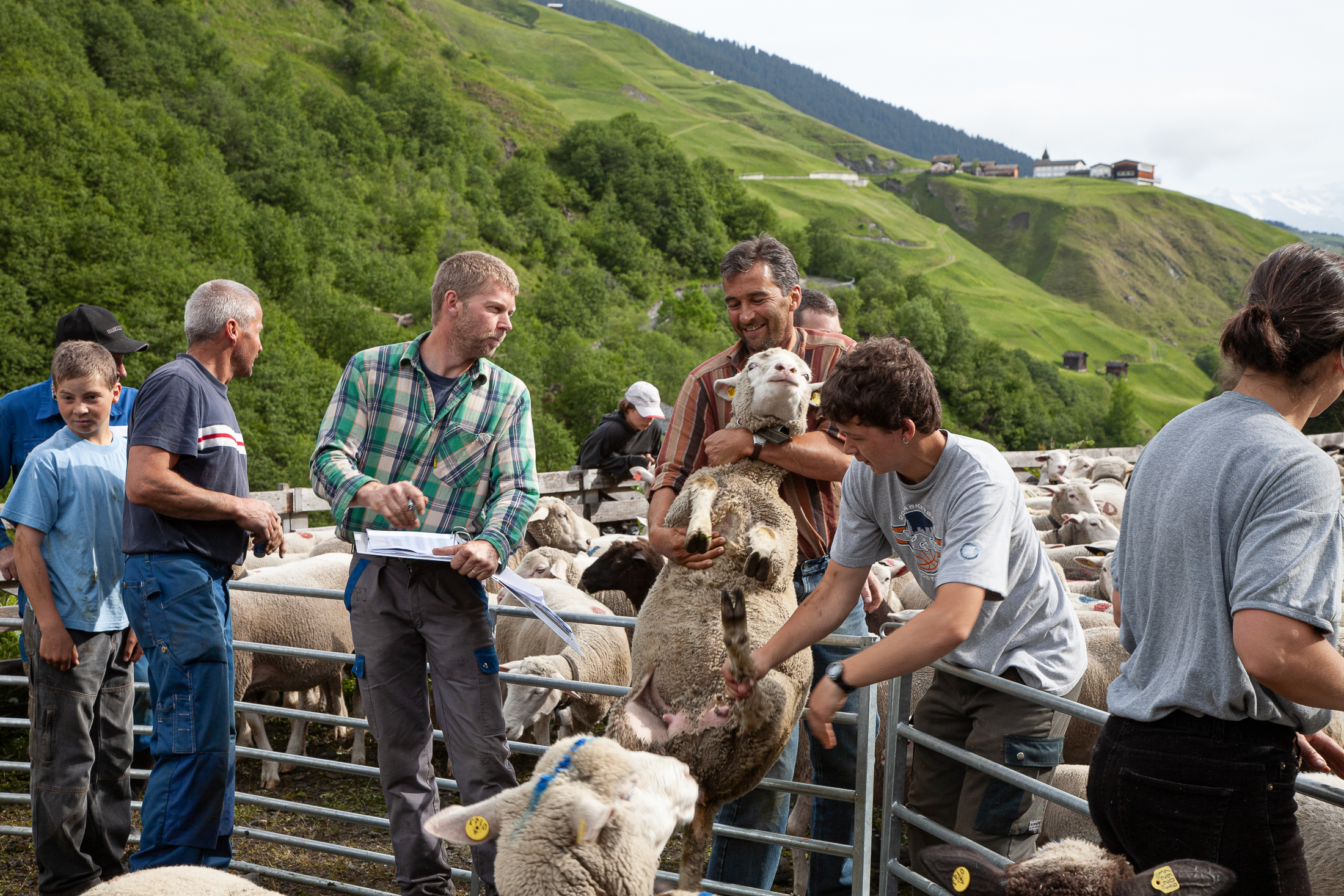
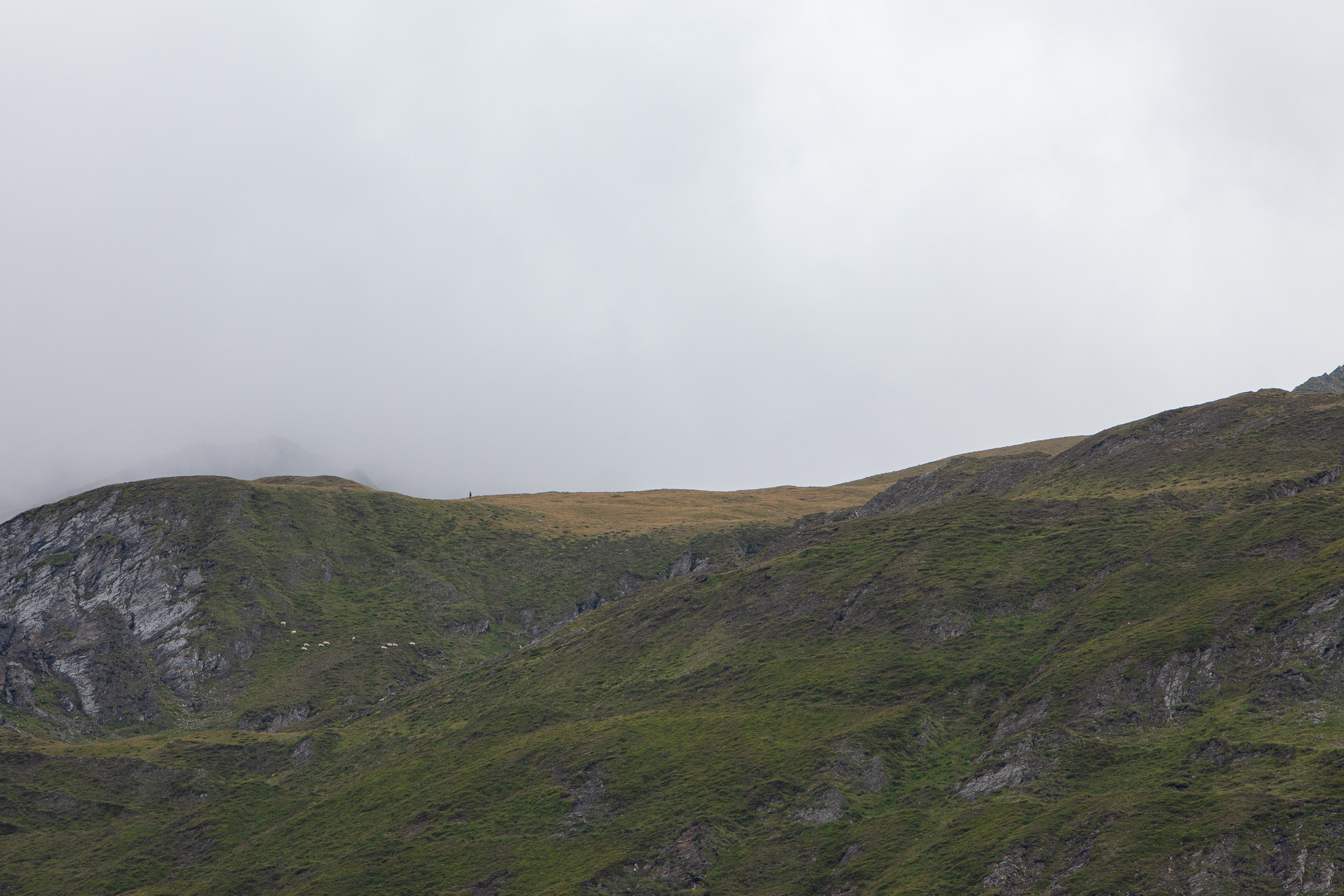
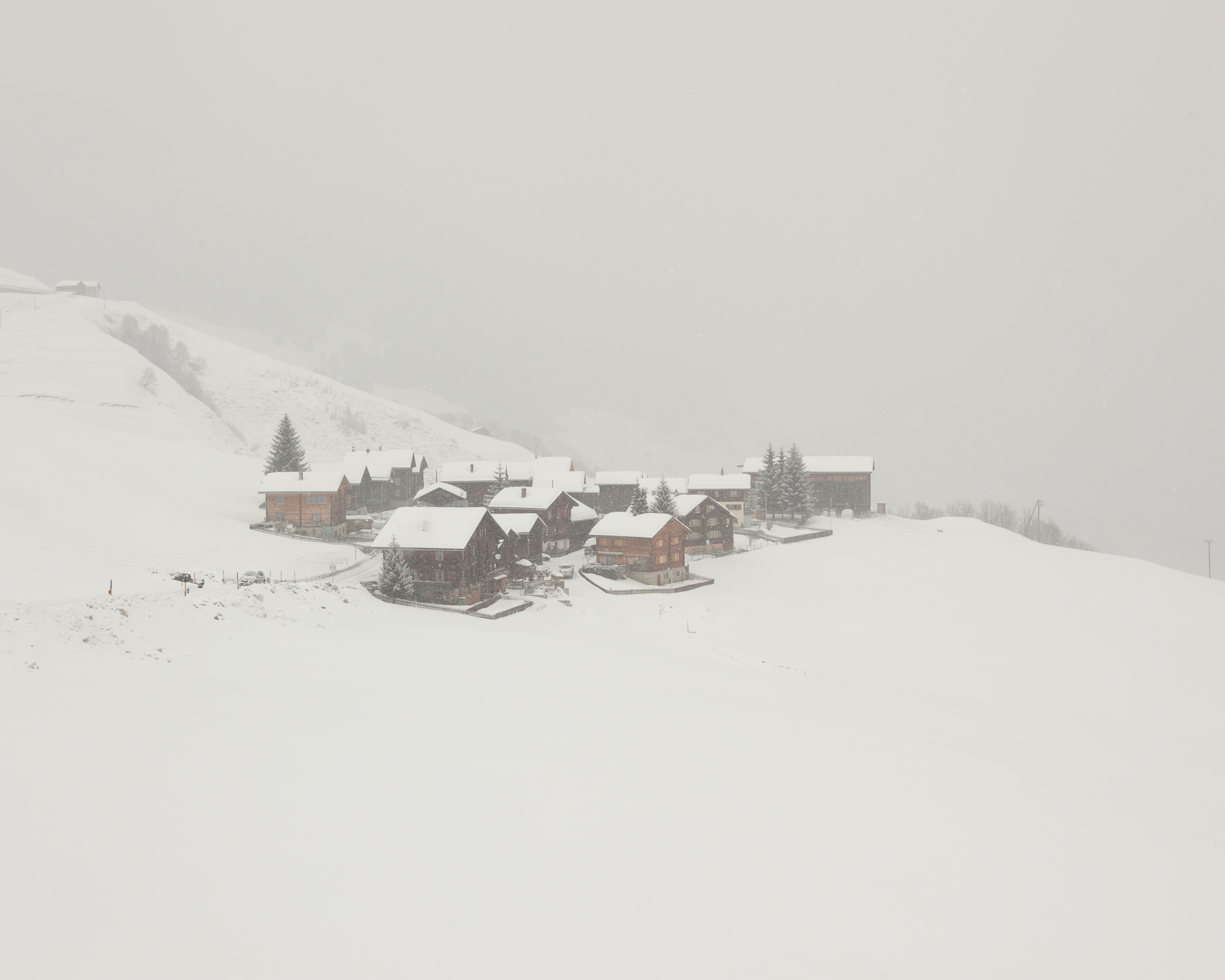
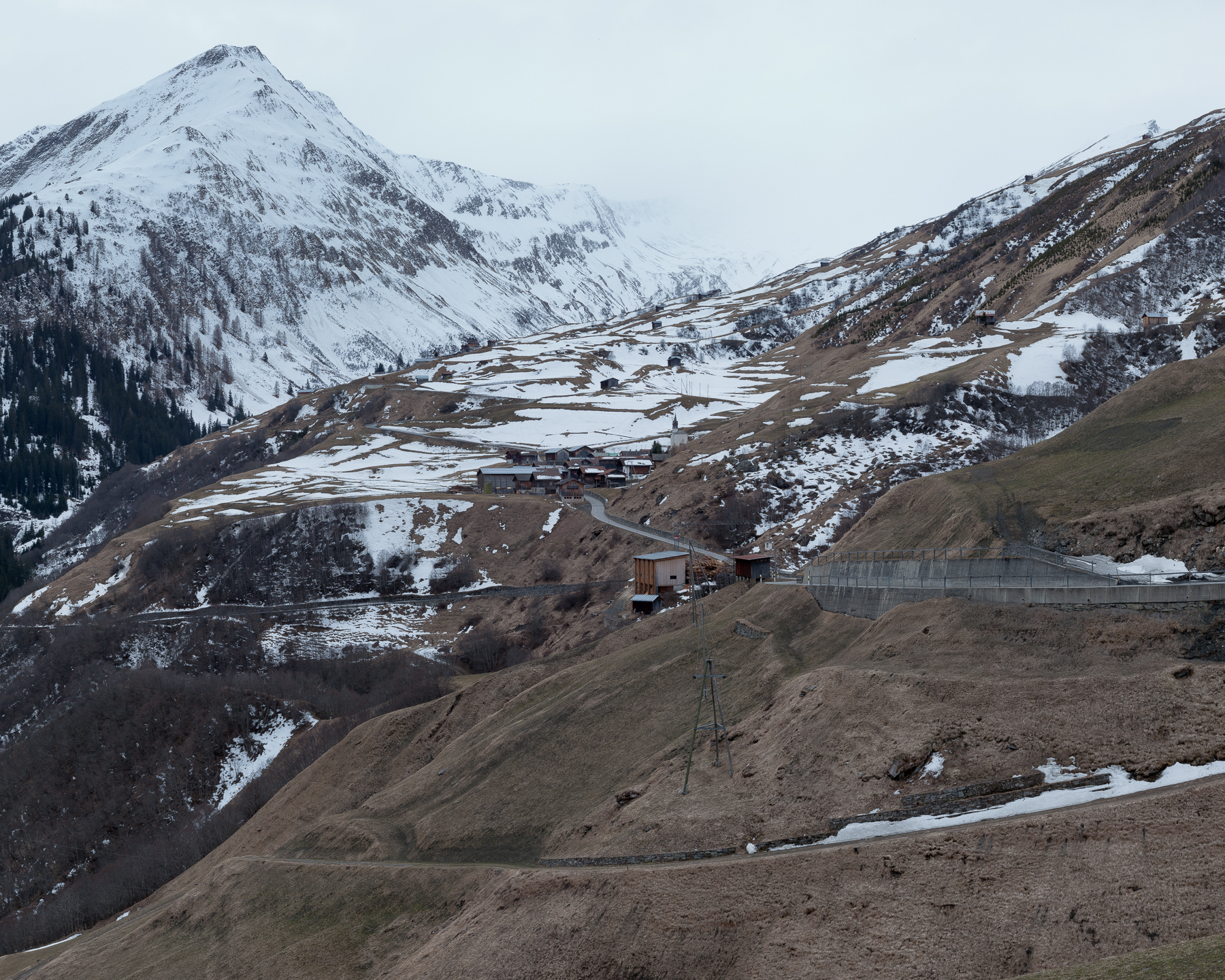
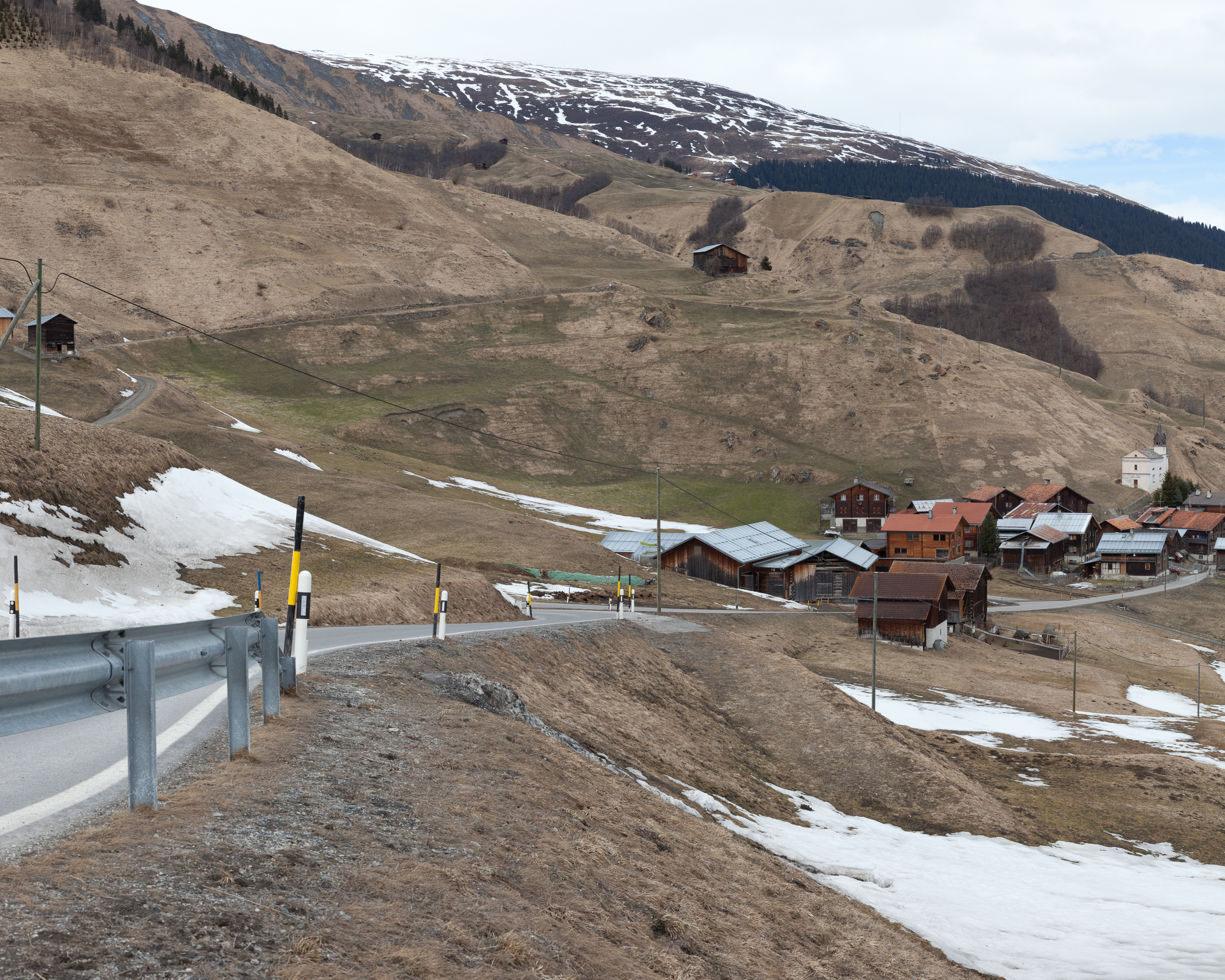
When the warm wind called Favugn in Romansh blows from the south over the Diesrut Pass in spring, the roofs start to drip and the shutters clatter all night long, prompting people to tear off pieces of newspaper, fold them up, and jam them in between the shutter and the back of the head-shaped stoppers to force the shutters tight against the wall. Some people get headaches. South-facing slopes change from brown to a subtle green seemingly overnight. The dirt roads used to get muddy before they were paved in the late 1980s and early 1990s. As a child, there would come a moment on a late afternoon one day in March, when I could tell for sure that winter had ended just then and there and spring had begun. It was a feeling deep within, a connection to the place with a melancholic tinge to it.
Es kommt sehr selten vor, dass ich im März in Vrin bin. Das ist schade , weil die Zeit zwischen Win ter und Frühling für mich mit vielen Gefühlen verbunden ist. Es sind stille Tage, auf der Schwelle zwischen den Jahreszeiten. Alles liegt in der Schwebe, der Föhn und der Nordwind, der Schnee und die ersten Gräser. Doch plötzlich gewinnt der Föhn die Oberhand, und jeder spürt, dass es so weit ist.
Jeu seregordel aunc bein che mintg’onn deva ei in gi zacu il da vos da mars ni entschatta d’avrel ch’ins veva avunda dalla marschauna. Il luft scadenava barcuns e tuttenina survegnevel quei sentiment «uss eisi primavera». Aunc oz a Los Angeles dat ei quei mum ent zacu in gi cu il vent neu dalla mar buffa tuttina sco il favugn – ni eba il «luft» ni «zuffel» sco nus schein – giu dil pass Diesrut.
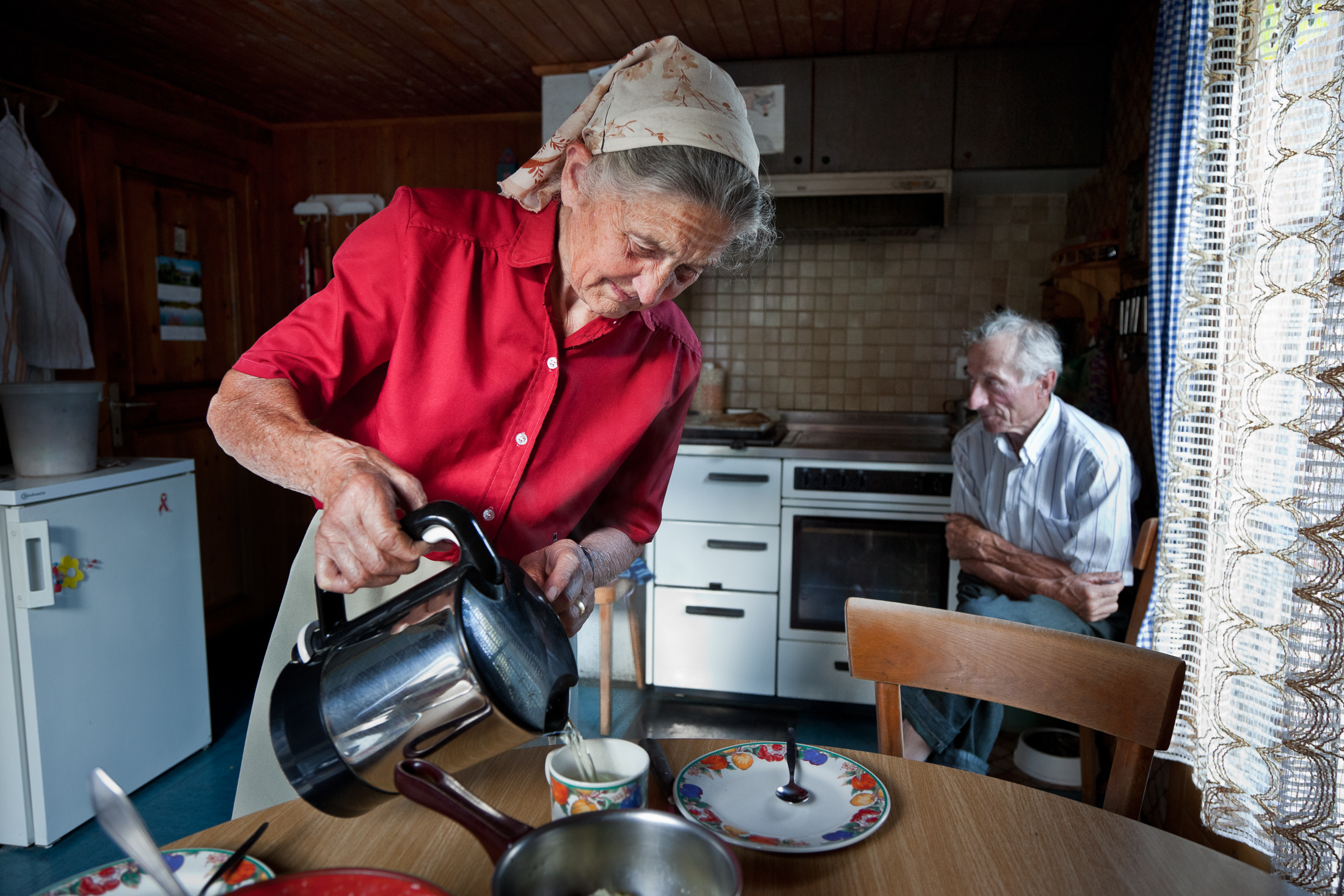
Mom’s Hands
Mutters Hände
Ils mauns da mumma
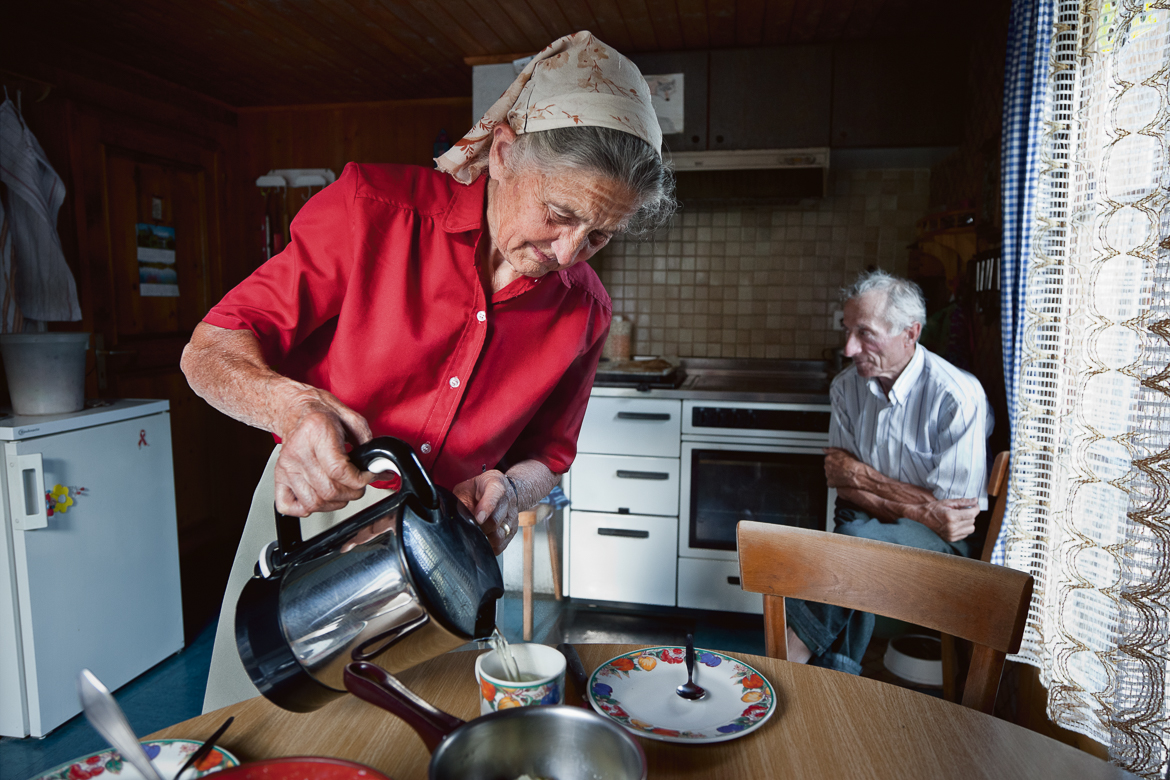
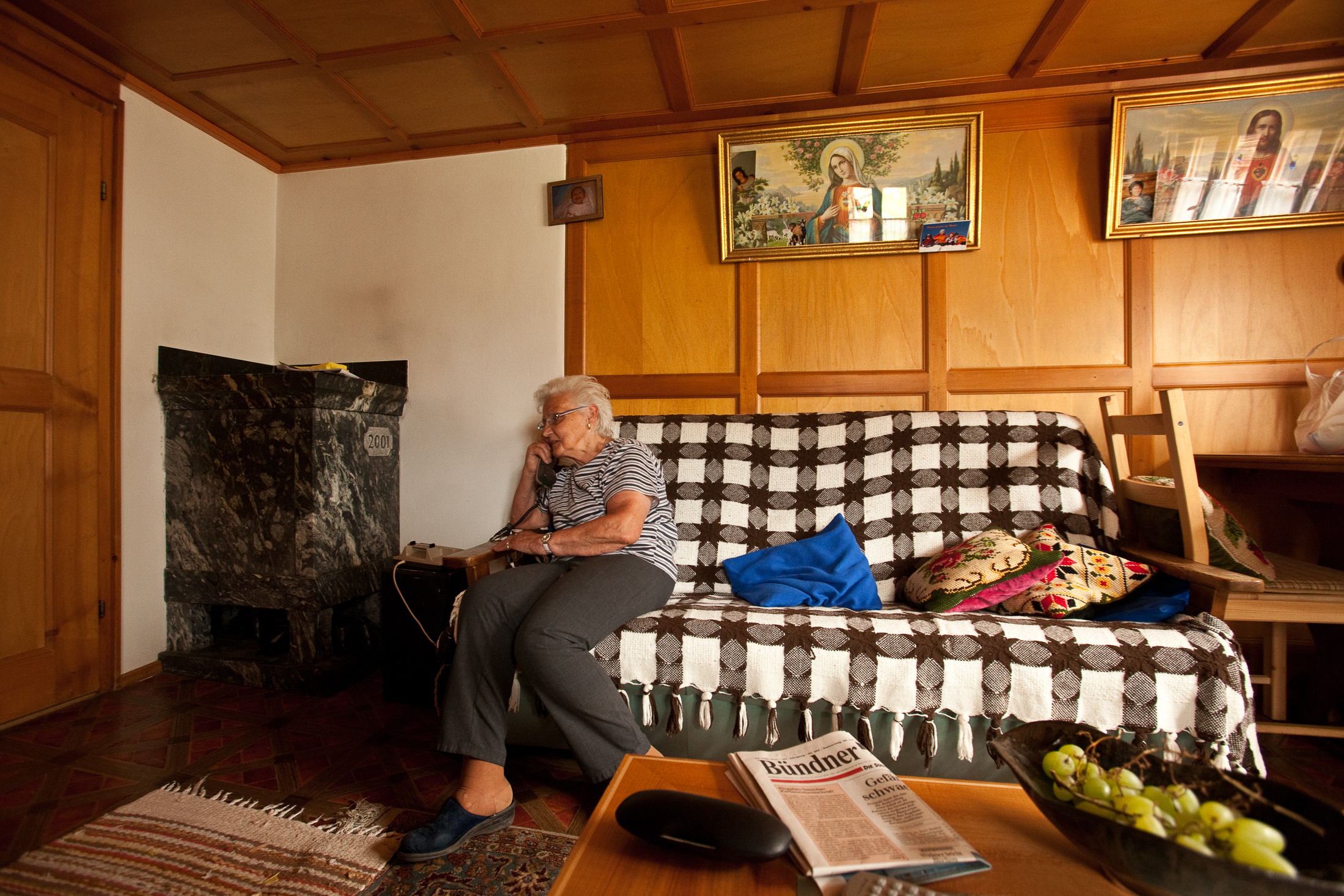
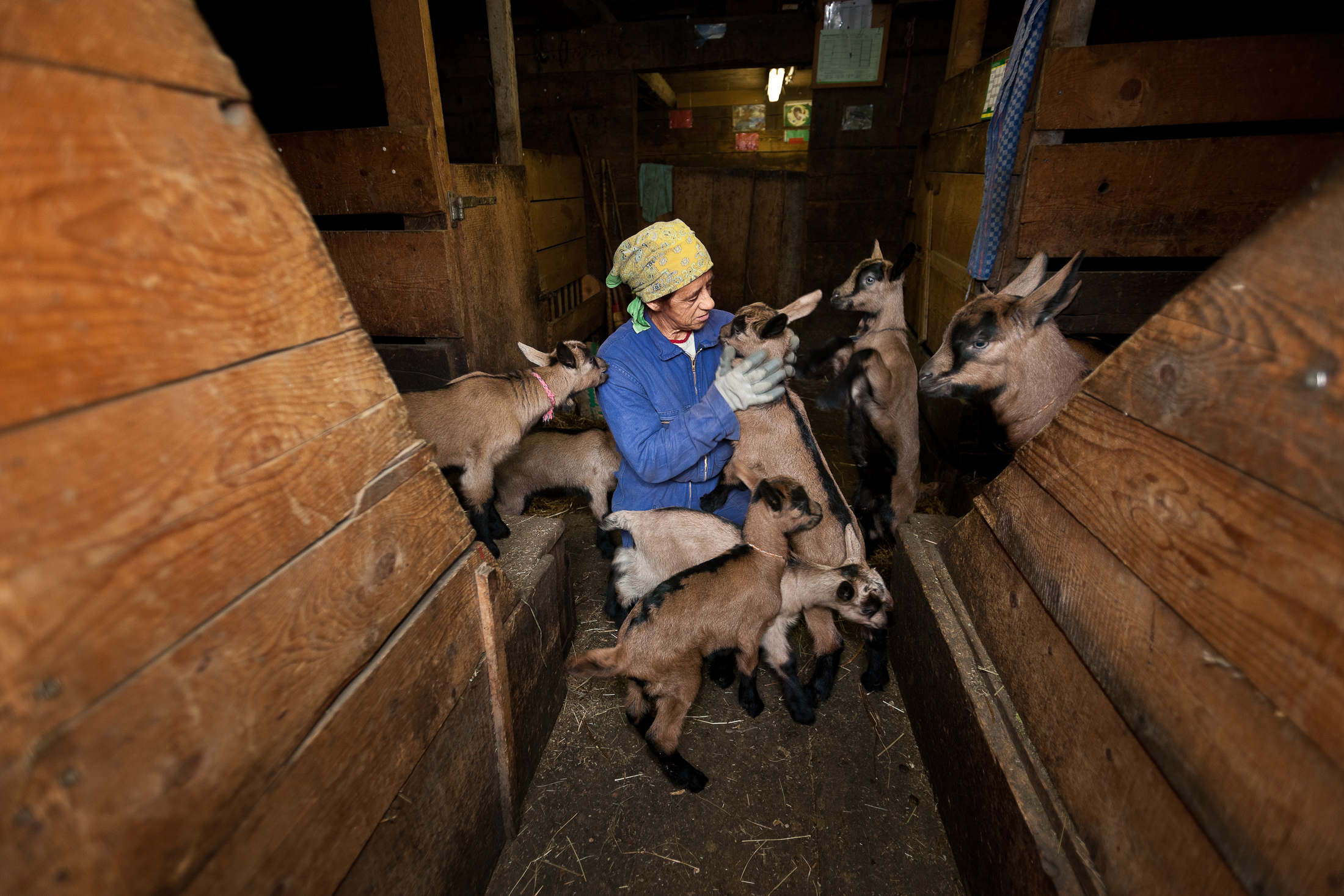
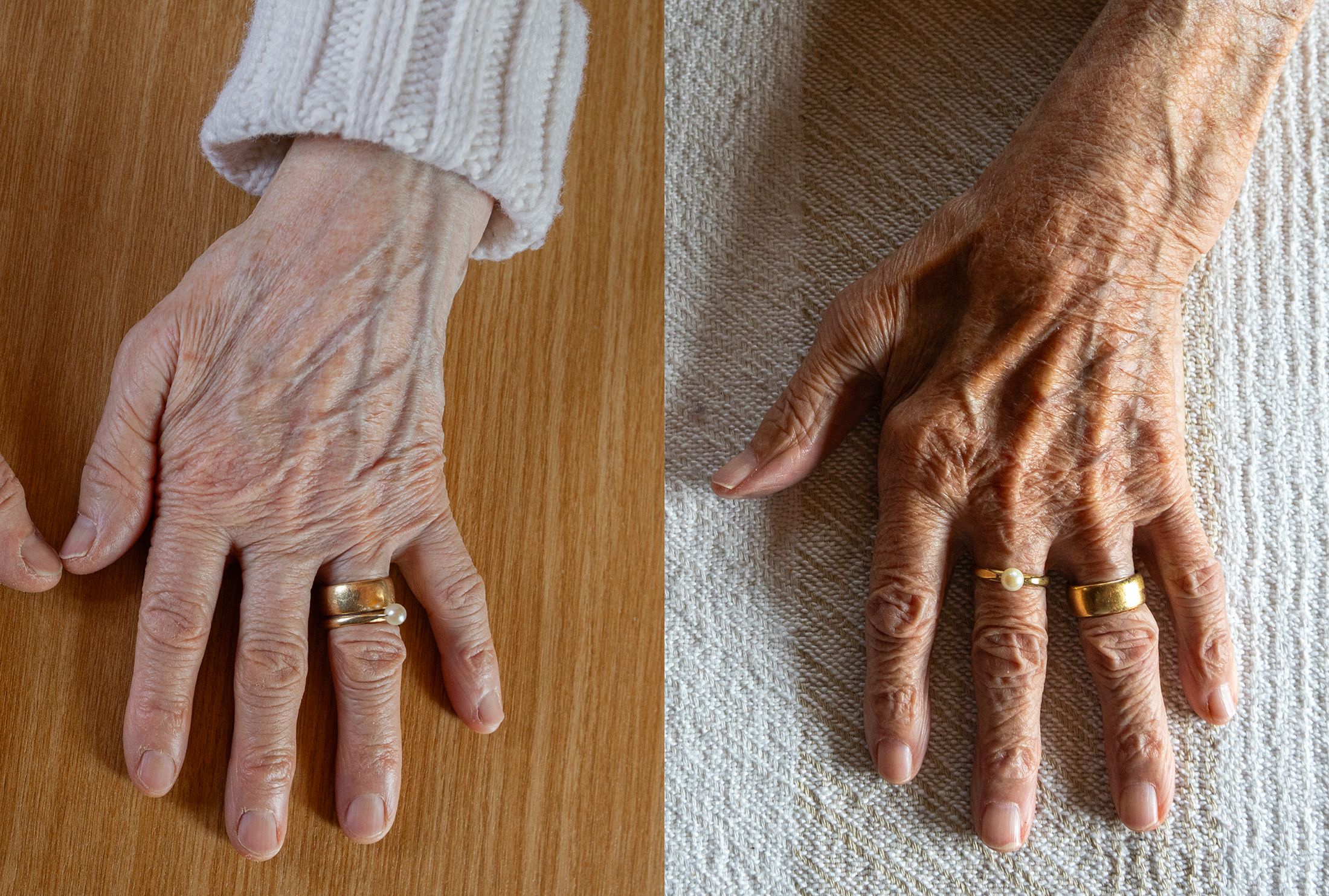
They have knitted clothing, changed diapers, wiped away tears, made bread and sausage, plucked chickens, weaved fabrics, planted potatoes, cut grass, Swiss chard, wheels of cheese, blocks of butter, birthday cakes . . . they have made breakfast, lunch, and dinner, prayed, milked goats, commanded pitchforks, scythes, and rakes, threaded needles, carried baby goats, baby sheep, and babies, picked blueberries, currants, and fleas, juggled pots and pans, and dishes of all kinds, done laundry at the fountain and with the machine in the basement in winter, spring, summer, and fall, written letters in Romansh and German, solved crossword puzzles, been cut, burned, and bruised, suffered arthritis, touched flesh and meat, life and death. They are love.
Diese Hände haben gestrickt, gewebt und gehäkelt, Windeln gewechselt, gebetet, Betten gemacht und Heubündel geschnürt, Geschirr und schmutzige Hände gewaschen, Tränen und Blut abgewischt, Brot, Käse und Wurst gemacht, Hühner gerupft, Kartoffeln gepflanzt und geerntet, Heu und Emd gemäht, mit Sensen, Rechen und Gabeln hantiert, Schäflein, Gitzi und Babys get ragen, Heidelbeeren, Himbeeren und Läuse abgelesen, mit Eimern und Pfannen jongliert, Wäsche am Brunnen und mit der Waschmaschine im Keller gewaschen, im Sommer, Herbst, Winter und Frühling, Briefe geschrieben, auf Romanisch und Deutsch, Kreuzworträtsel gelöst, sich ver brannt, geschnitten und gekratzt und an Arthritis gelitten. Sie haben Leben und Tod berührt. Sie haben geliebt.
Quels mauns han fatg caltschiel, midau piazs, furschau giu larmas, fatg paun e ligiongias, splimau gag linas, tessiu, mess e cavau truffels, segau geraun e risdiv, mess en ponns, fatg en capuns, fatg caschiel, sters pischada, pettas sils onns, ensolver, gentar, marenda e tscheina, dumbrau curals dalla corda da paternos, mulsch cauras, manischau fuortgas, faultschs e ristials, mess fil en guila, purtau poppas e pops, anseuls e tschuts, encuriu izuns, iuas sogn Gion, plugls e pelischs, lavau giu cazzettas, vanauns e pusada da tuttas sorts, fatg lischiva on fontauna e culla maschina da lavar igl unviern, primavera, stad ed atun, scret brevs per romontsch e tudestg, fatg ora legns, els ein stai setagliai, sebarschai, sgriflai, han suffriu d’artritis, tuccau pial e carn e veta e mort. Els han carezau.